Speaking at the "National Conference on E-commerce in Communes: Industry and Trade Brings E-commerce to Communes, a Launchpad for Double-Digit Growth" held on the afternoon of November 11, 2026, Deputy Minister of Industry and Trade Nguyen Viet Son affirmed: “The Ministry of Industry and Trade will continue to work alongside ministries, sectors, localities, and businesses to develop e-commerce in conjunction with building new rural areas, increasing people's income, and contributing to the country's double-digit growth target.”

Overview of the Conference
E-commerce is one of the new growth drivers that needs a breakthrough.
Deputy Minister Nguyen Viet Son stated that the Resolution of the 14th National Congress of the Party sets the target of average economic growth of 10% or more per year for the period 2026-2030, with the digital economy accounting for approximately 30% of GDP by 2030. Conclusion No. 18-KL/TW of the 2nd Plenum of the 14th Central Committee links the five-year plan with the goal of striving for "double-digit" growth. Resolutions No. 57-NQ/TW and No. 68-NQ/TW of the Politburo emphasize breakthroughs in science and technology, digital transformation, and the development of the private economy. Resolution No. 169/NQ-CP dated June 27, 2026, of the Government assigns growth targets to localities, requiring provincial-level leaders to clearly identify new growth drivers and potential.
For the Ministry of Industry and Trade, Resolution No. 01/NQ-CP dated January 8, 2026, identifies e-commerce as one of the new growth drivers requiring breakthroughs and assigns the Ministry of Industry and Trade to lead two targets for 2026: a 20-22% increase in the B2C e-commerce market and a 60-62% rate of businesses applying e-commerce. The industry's action plan, amended by Decision No. 648/QD-BCT, requires provincial and city Departments of Industry and Trade to base their efforts on growth scenarios to achieve the assigned targets.
Decision No. 1568/QD-BCT dated June 3, 2025, of the Ministry of Industry and Trade approves the National E-commerce Development Master Plan for the period 2026-2030. By 2030, the goal is to have 60% of small and medium-sized enterprises operating on e-commerce platforms; 60% of communes and equivalent administrative units having merchants selling goods or providing services online; 1 million businesses, cooperatives, business households, individuals, state management officials, and students trained in e-commerce application skills; and localities outside Hanoi and Ho Chi Minh City accounting for 50% of the total B2C transaction value nationwide.
Legally, the Law on E-commerce No. 122/2025/QH15 and Decree No. 248/2026/ND-CP will take effect from July 1, 2026. Decision No. 51/2025/QD-TTg includes the effective implementation of e-commerce activities as content 7.3 in the National Criteria Set for New Rural Communes, with specific guidance from Circular No. 17/2026/TT-BCT. For the first time, communes are responsible for measuring e-commerce in their areas.
4 key strategic directions towards achieving the stated goals.
The market has a good growth foundation. According to the E-commerce Department, the e-commerce market size will reach approximately US$31 billion in 2025, an increase of 25.5%, accounting for about 11% of total retail sales of goods and consumer services. According to the General Statistics Office, in the first 10 months of 2026, total retail sales will reach VND 6,618.9 trillion, an increase of 13.5%, within the 13-15% target set by the Government.
However, e-commerce development remains uneven. According to the Vietnam E-commerce Association, by 2025 the ratio between Hanoi, Ho Chi Minh City and other localities will still be at 70-30; the Association's 2026 E-commerce Index for Ho Chi Minh City is 91.1 points, Hanoi 87.5 points, while the national average is 15.8 points.
This gap is most evident at the grassroots level. A review conducted by the Industry and Trade Newspaper on the information portals of commune-level governments, with data finalized on November 4, 2026, revealed that out of 2,497 communes and wards with sufficient data, 587 communes had activities organized by the commune itself related to e-commerce. However, only 178 communes, equivalent to 7.1%, were able to provide results; only 18 communes provided the number of orders, revenue, or number of selling households. While this is information provided by the government itself and not a measure of sales figures, it shows that implementation at the grassroots level still needs to be more substantive.
In practice, there have been some noteworthy approaches. After two months of implementation, Cho Lach commune has 66 participating vendors and content creators, with over 50,000 orders on TikTok Shop. In Phuong Duc commune, a rattan and bamboo workshop sold nearly 22,000 products in three months. These results need to be measured, maintained, and replicated.
According to the Deputy Minister, in order to achieve the set goals, the Ministry of Industry and Trade has identified four key directions:
Firstly , we need to perfect a synchronized, modern, and secure e-commerce development ecosystem. This includes connecting production, distribution, platforms, payment, and logistics; strengthening law enforcement and improving the state's management capacity in e-commerce; and ensuring a transparent and safe business environment and protecting consumer rights.
Secondly, we need to develop sustainable e-commerce, strengthen regional linkages, and expand markets for Vietnamese goods. We should leverage the advantages of products and industries in each locality; prioritize support for rural, mountainous, and border areas; and link market expansion with improving product quality, branding, and supply capacity.
Thirdly, strengthen communication, training, and enhance digital skills tailored to each target group. Improve the management, statistical, and data exploitation capabilities of local officials; implement in-depth training down to the commune level, linking it with practical application and the ability to maintain activities after support.
Fourth, strengthen international cooperation and promote cross-border e-commerce. Support Vietnamese businesses in developing brands, meeting international market standards, and expanding online exports.
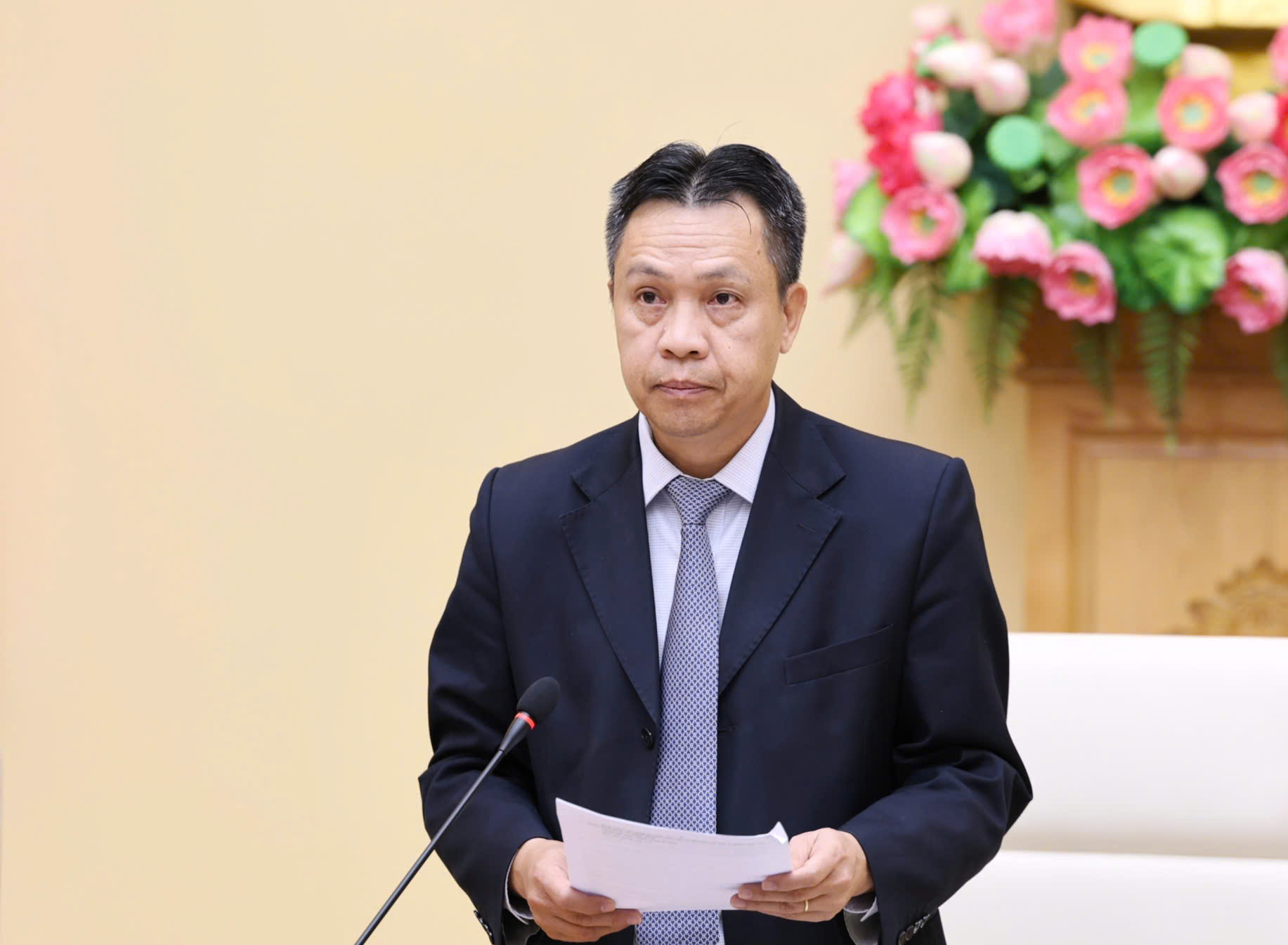
Deputy Minister of Industry and Trade Nguyen Viet Son
Affirming that the development of e-commerce at the commune level needs to go beyond simply listing products on platforms or organizing a few livestream sessions, Deputy Minister Nguyen Viet Son requested the Conference to focus on discussing and clarifying three tasks:
Firstly, enhance the state management capacity for e-commerce at the commune level. Accordingly, the Deputy Minister assigned the E-commerce Department to strengthen policy guidance, statistics, and data exploitation, clarifying the measurement methods and supporting documentation for content 7.3; the Departments of Industry and Trade should link e-commerce with local growth scenarios and advise on setting targets by commune group. Commune-level authorities should have a focal point, a number of platforms, and identify product advantages and priority target groups.
Secondly , it is necessary to enhance self-selling skills for people, cooperatives, and household businesses. According to the Deputy Minister, e-commerce platforms, businesses, associations, and service units need to coordinate training and connect production with consumption of specialty products, OCOP products, and Vietnamese goods; paying attention to initial delivery costs in mountainous communes, transaction security, and fraud prevention.
Thirdly, effectiveness should be measured by tangible results and sustainability. The Deputy Minister emphasized that the measure should not only be the number of activities organized, but also the number of vendors who maintain their operations and generate revenue after the support period, the number of orders that replace views, and the actual economic benefits created for the locality.
Deputy Minister Nguyen Viet Son affirmed that the Ministry of Industry and Trade will continue to work alongside ministries, localities, and businesses to develop e-commerce in conjunction with building new rural areas, increasing people's income, and contributing to the country's double-digit growth target.