On July 31, 2026, in Dong Thap province, the Ministry of Industry and Trade organized a conference to disseminate the Circular guiding the implementation of some criteria under the National Criteria Set for New Rural Communes in the period 2026 - 2030 within the scope of state management of the Ministry of Industry and Trade.
The conference was organized by the Department of Innovation, Green Transformation and Industrial Promotion (DCK), with the participation of several units of the Ministry of Industry and Trade (Electricity Department, Domestic Market Management and Development Department, E-commerce and Digital Economy Department), representatives of Vietnam Electricity Group; and representatives of the Central Coordination Office of the National Target Program. On the local side, attendees included representatives of leadership and professional staff responsible for managing and evaluating the implementation of criteria and content of the Program under the Ministry of Industry and Trade's purview; representatives of the three Electricity Corporations of the North, Central, and South; representatives of provincial/city Electricity Companies; representatives of some commune-level People's Committees; and staff implementing the Program at the grassroots level.
The national criteria for new rural communes for the period 2026-2030, issued with Decision No. 51/2025/QD-TTg dated December 29, 2025, by the Prime Minister, will take effect from February 15, 2026. This serves as the basis for localities to organize the implementation, evaluation, and recognition of communes meeting the new rural commune standards during the 2026-2030 period. The criteria are based on 10 criteria with 47 indicators, applied to three groups of communes (Group 1, Group 2, and Group 3) to suit the development conditions of each locality.
On March 31, 2026, the Ministry of Industry and Trade issued Circular No. 17/2026/TT-BCT to concretize regulations and guidelines for implementing certain criteria under the National Criteria Set for New Rural Communes in the period 2026-2030, within the scope of state management of the Ministry of Industry and Trade.
The conference, held on the morning of July 31st, aimed to disseminate several new documents regarding the National Target Program for New Rural Development in the period 2026-2035; and to implement Circular No. 17/2026/TT-BCT of the Ministry of Industry and Trade guiding the implementation of some criteria under the National Criteria Set for New Rural Communes in the period 2026-2030.
Later that afternoon, delegates participated in a field survey in several communes in Dong Thap province, to support the implementation of criteria related to the Industry and Trade sector in the construction of new rural areas.
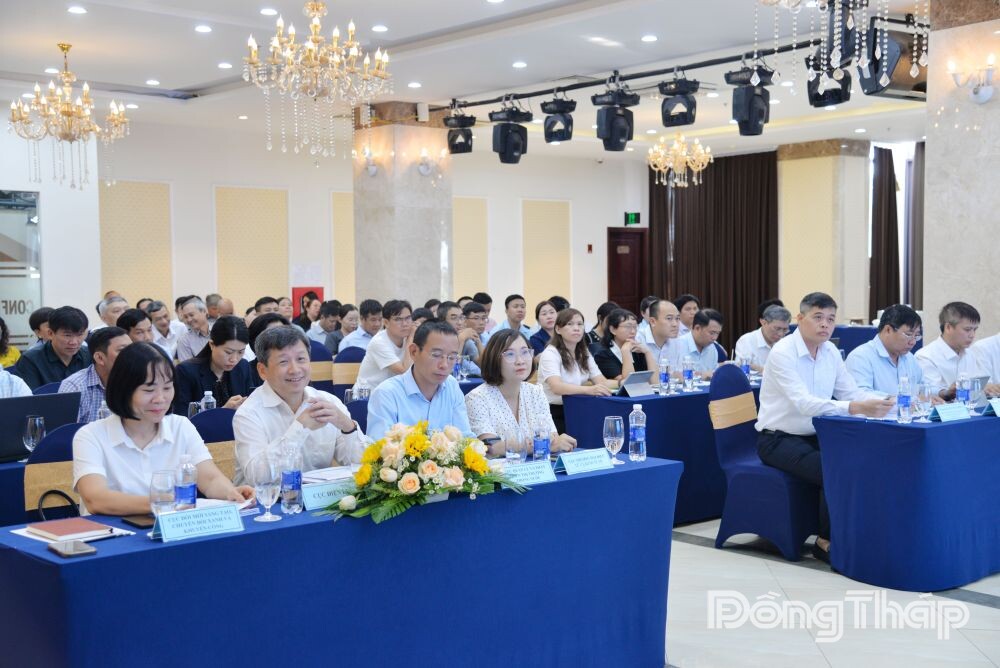
Conference to disseminate Circular guiding the implementation of some criteria under the National Criteria Set for New Rural Communes in the period 2026 - 2030 under the state management scope of the Ministry of Industry and Trade (Photo: Dong Thap Newspaper)
From evaluating results to promoting substantive digital transformation at the grassroots level.
One of the topics that attracted the attention of delegates at the Conference was the guidance on implementing Criterion 7.3 on e-commerce in the National Criteria Set for New Rural Communes in the 2026-2030 period.
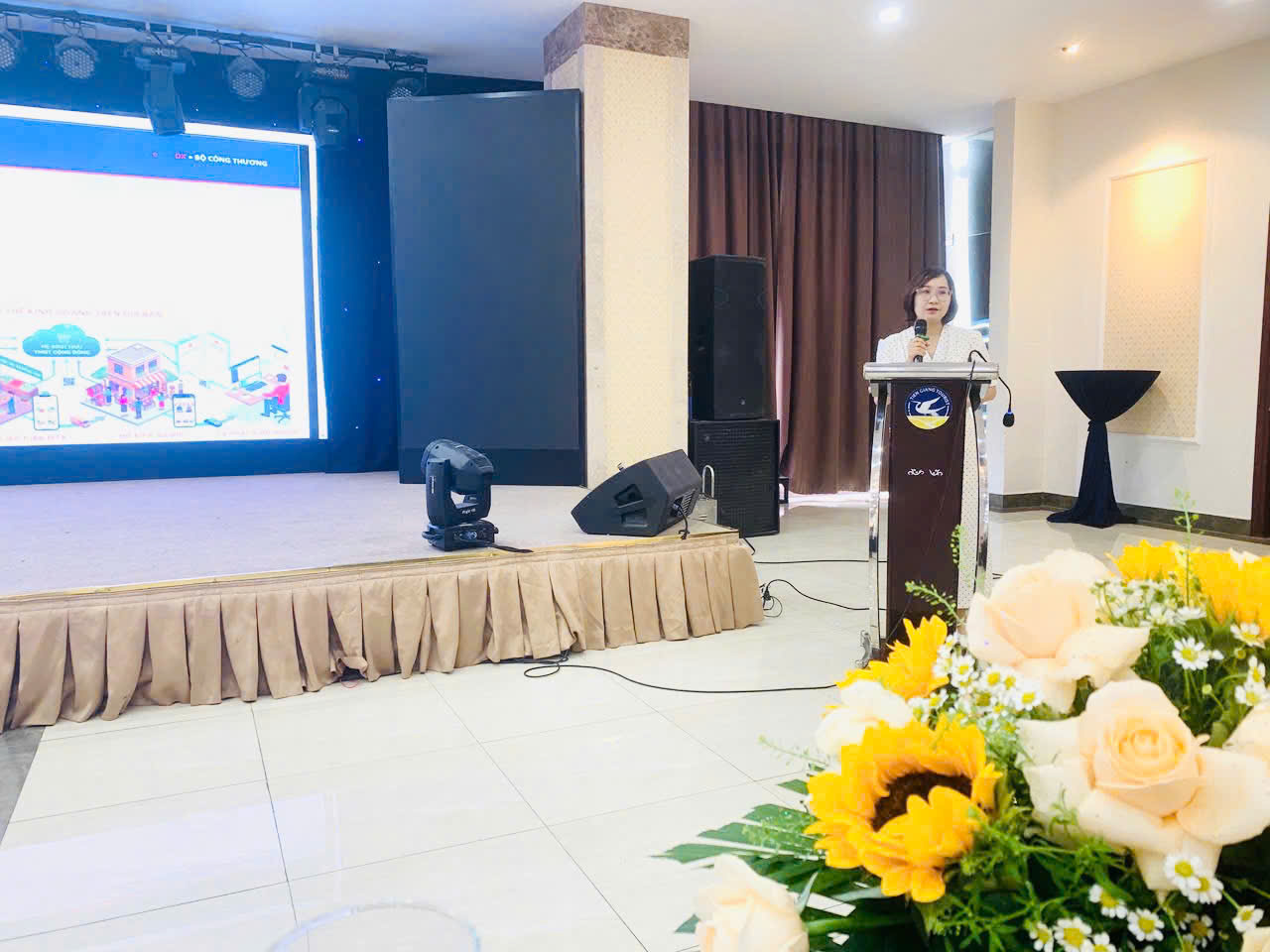
Ms. Nguyen Phuong Ly presented her paper at the conference.
Speaking at the conference as the representative of the unit assigned by the Department of E-commerce and Digital Economy to guide the implementation of Criterion 7.3 on e-commerce in localities, Ms. Nguyen Phuong Ly - Deputy Head of the Center for E-commerce and Digital Technology Development (eComDX) - introduced a new approach to evaluating the effectiveness of e-commerce activities. Accordingly, the evaluation does not stop at simply counting the number of stores or products uploaded to the digital environment, but aims to measure the actual level of digital transformation in the locality.
Accordingly, the implementation of Criterion 7.3 is placed within the close link between people, supporting infrastructure, and practical application results. E-commerce is only effective when people, cooperatives, and businesses have sufficient skills to utilize digital platforms; local authorities proactively organize support activities; and local products are digitized, promoted, and consumed stably in the online environment.
A notable point in the presentation by the representative from the Department of E-commerce and Digital Economy was the encouragement for localities to build e-commerce ecosystems at the commune level. Instead of letting individual producers implement it themselves, Ms. Ly proposed leveraging the role of community support groups, socio-political organizations, exemplary businesses, and logistics companies to form a network that supports people from building digital storefronts and promoting products to connecting them with consumers. Livestream sessions promoting agricultural products, hosted by local authorities, were also considered a solution to promote digital transformation linked to local economic development.
In addition, Ms. Ly also emphasized the need to enhance digital capabilities for all three target groups: management officials, business entities, and the general public. The content shared focused not only on online sales skills but also on updating new trends such as the application of artificial intelligence (AI), digital marketing, cross-border e-commerce, consumer protection, and fraud prevention in the online environment. This is considered a crucial foundation for localities to effectively implement e-commerce activities in the new phase.
Another new point shared by Ms. Ly is the data-driven and digitally evidence-based evaluation method. Local authorities are guided to utilize data from state management systems, online platforms, logistics units, and payment intermediaries, combined with on-site surveys to ensure objectivity in the evaluation process. Supporting documents are also standardized to facilitate verification, cross-checking, and assessment at all levels.
Contributing to promoting digital transformation in building new rural areas.
It can be affirmed that the objective of Criterion 7.3 is not only to fulfill the targets in building new rural areas but also to contribute to the formation of a sustainable e-commerce environment, promote the consumption of local products, increase people's income, and create momentum for the development of the digital economy right from the grassroots level.
During the presentation by the representative from eComDX, many delegates expressed interest in the methods for collecting data and building evidence dossiers to support the evaluation of Criterion 7.3.
Accordingly, localities need to combine multiple data sources such as statistics from state management agencies, online searches, surveys of at least 20% of business entities or citizens for indicators requiring sociological investigation, and also utilize financial data from postal services, banks, payment intermediaries, or tax reports to determine e-commerce sales.
Regarding supporting documents, Ms. Ly noted that localities need to compile a complete list of business entities along with links to their websites or stores on e-commerce platforms; and also retain the decision to establish community support groups, documents proving online operations, revenue reports, and logistics unit documents to facilitate the assessment process.
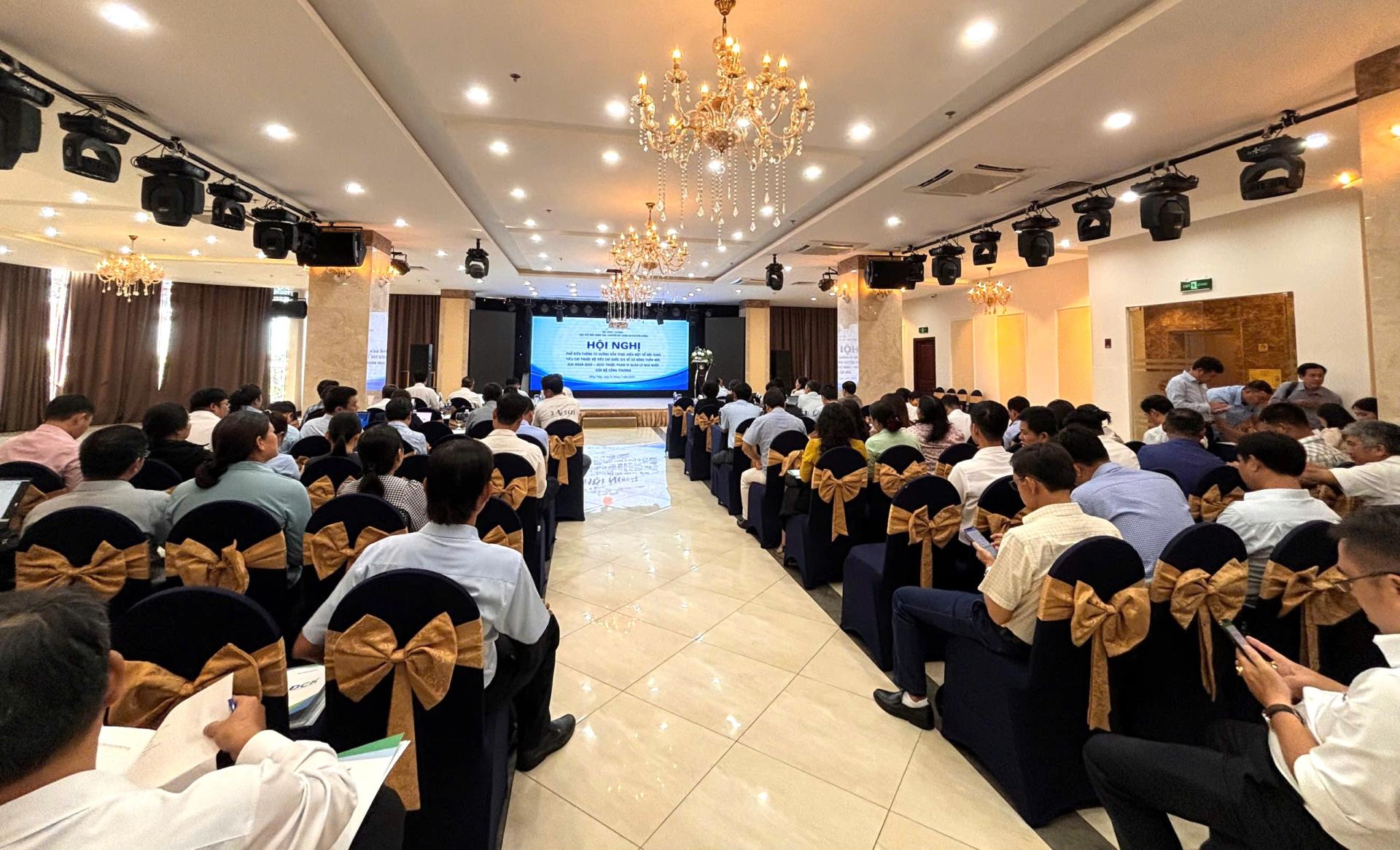
Overview of the Conference
During the discussion, representatives from the Departments of Industry and Trade of provinces such as Tay Ninh and Vinh Long proposed that the Department of E-commerce and Digital Economy support localities in implementing training programs on e-commerce within the framework of the National E-commerce Development Program for the period 2026-2030, focusing on improving digital capabilities and livestreaming sales skills.
Through the Conference, localities were updated on the new regulations of the Ministry of Industry and Trade, and received specific guidance on the content, evaluation methods, and implementation of Criterion 7.3. The synchronized implementation of solutions to improve digital skills, develop the e-commerce ecosystem, and measure the effectiveness of e-commerce activities will contribute to promoting digital transformation in rural areas, enhancing the competitiveness of businesses, expanding the market for local products, and effectively implementing the National Target Program for New Rural Development in the 2026-2030 period.
eComDX partners with local authorities to promote e-commerce and build new rural areas. As the unit assigned by the Department of E-commerce and Digital Economy to guide the implementation of Criterion 7.3 on E-commerce in the National Target Program for Building New Rural Areas giai đoạn 2026-2030, the Center for E-commerce and Digital Technology Development (eComDX) is actively accompanying localities nationwide in the implementation process. In addition to supporting the dissemination of regulations, training, and guidance on evaluation methods, eComDX also collaborates in building models for developing e-commerce ecosystems at the local level, enhancing digital capacity for managers, cooperatives, businesses, and the people; and promoting the application of digital platforms, artificial intelligence (AI), logistics, and digital payments in the consumption of local products. With a focus on tangible results, eComDX will continue to work alongside localities to effectively implement Criterion 7.3, contributing to expanding markets for rural products, increasing people's income, promoting the development of the digital economy, and successfully implementing the National Target Program for New Rural Development in the 2026-2030 period. |